define wrongful dismissal legally
When asked, “Could you define wrongful dismissal legally?” the answer involves more than just an unfair firing—it refers to a termination that violates the terms of an employment contract or contravenes employment legislation. Legally speaking, wrongful dismissal occurs when an employee is terminated without cause and is not given proper notice or compensation in lieu of notice, as required by law or by the terms of the employment agreement. The legal definition hinges on contractual obligations and statutory rights, which are in place to protect employees from unjust or arbitrary dismissal.
To define wrongful dismissal in legal terms, it’s important to understand the difference between termination “with cause” and “without cause.” A dismissal with cause may result from serious misconduct, such as theft, fraud, or repeated insubordination. In such cases, an employer may terminate an employee without notice or severance. However, when termination is without cause, the law requires the employer to provide reasonable notice or pay instead of notice. If this doesn’t happen, the employee has a valid claim for wrongful dismissal.
Legally, wrongful dismissal claims are typically rooted in the failure of an employer to meet their obligations under either common law or statutory employment standards. Common law generally offers more generous notice requirements than statutory law, and courts often use a range of factors to determine what constitutes “reasonable notice.” These factors include the employee’s age, length of service, the nature of the job, and the availability of similar employment. If an employer fails to meet the reasonable notice standard, they may be liable for damages.
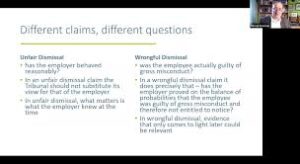
Could you define wrongful dismissal legally?
When someone asks, “Could you define wrongful dismissal legally?” it’s also essential to consider the role of employment contracts. Some contracts explicitly state the amount of notice or severance pay an employee is entitled to upon termination. If the employer does not honor these terms, it constitutes a breach of contract, giving the employee legal grounds to pursue a wrongful dismissal claim. In cases where no written contract exists, courts often apply common law principles to assess whether the dismissal was lawful.
To further define wrongful dismissal, it’s necessary to consider the exclusion of other factors that might seem unfair but are not necessarily illegal. For instance, being fired due to personality clashes, restructuring, or downsizing may not be wrongful if proper notice or compensation is provided. However, dismissals involving discrimination, harassment, or retaliation may fall under other legal violations such as human rights laws or whistleblower protections, and may also form part of a wrongful dismissal claim if they breach the employment agreement or violate the law.
In summary, to legally define wrongful dismissal, one must consider both the terms of the employment contract and the minimum standards set by employment legislation. The key issue is whether the employer failed to provide appropriate notice or justification for the dismissal. If they did, the employee may be entitled to compensation, which can include lost wages, benefits, and other damages. Understanding the legal context is crucial in evaluating whether a dismissal was truly wrongful and what remedies might be available.
